

Priya Nair had spent 14 years handling claims at a mid-sized insurer in Leeds, the last six as the person colleagues brought the strange ones to. Her queue in 2024 held sixty-odd claims a day. Fifty of them were routine — a rear-end collision, a burst pipe, a stolen bike. Ten required actual thought. Perhaps one was genuinely strange: dates that didn’t quite line up, an invoice from a garage that existed mostly on paper, a claimant whose story was a little too polished.
She caught those. She caught them because — although she would never have put it this way — the fifty routine claims were her instrument panel. Ten thousand ordinary claims a year had taught her exactly what ordinary looked like: how a genuine invoice was formatted, when a real claimant rings twice, what an honest delay sounds like. The strange ones announced themselves by their wrongness against a baseline she was refreshing daily without noticing she was doing it.
In early 2025, the insurer deployed claims automation, and it was good. Within a year it was settling the routine end-to-end: intake, verification, payment, done. Priya’s queue fell from sixty to fourteen. Management called it “elevating our people to higher-value work”, and to be fair to them, they meant it.
Every one of the fourteen was hard. Complex liability. Distressed claimants. Suspected fraud — flagged, now, by a model, rather than by the prickle at the back of Priya’s neck.
Eighteen months in, Priya had noticed two things. The first was that she was more tired than she had ever been in the job, in a way that weekends didn’t fix. Every case was a summit; there were no valleys between them any more. The second was harder to name: her sense of what normal looked like was going soft. When a flagged claim was strange, she increasingly could not say what it was strange against. The machine handled the ordinary — and the ordinary, it turned out, had been the source of her radar.
Priya’s job had become harder and shallower at the same time. Nobody designed that. It is simply what is left when you subtract the routine.
A warning from 1983
The clearest description of what is happening to Priya was published more than four decades ago. In 1983, the cognitive psychologist Lisanne Bainbridge wrote a short paper in Automatica called “Ironies of Automation”, about industrial control rooms and autopilots. It has been quietly famous among human-factors researchers ever since, and it reads today like a memo about the 2026 workplace that arrived forty-three years early.
Bainbridge’s argument was structural, not sentimental. When designers automate a process, they automate the parts that can be specified — the routine, the repeatable, the easy. Whatever cannot be specified is left to the human. That produces two ironies. The first: the human is left holding precisely the tasks the designers could not figure out how to automate — an arbitrary collection of the hardest, rarest, most ambiguous work. The second is crueller: the automation simultaneously removes the routine practice through which the human maintained the very skills those hard, rare moments require.
“By taking away the easy parts of the task, automation can make the difficult parts of the human operator’s task more difficult.”
— Lisanne Bainbridge, “Ironies of Automation”, Automatica, 1983
Aviation lived this first, and paid for the lesson in accident reports. Autopilot flies the cruise better than any human, so pilots stopped hand-flying — and their manual instincts, maintained for decades by thousands of uneventful hours, began to decay. By 1997, American Airlines’ training department was warning its pilots about becoming “children of the magenta line” — crews so accustomed to following the automation’s guidance that they struggled in the moments it handed the aircraft back. The warnings became case files. When Air France 447 was lost over the Atlantic in 2009, investigators found a crew confronted, at altitude, with a situation the automation had always previously handled — and manual instincts that thousands of uneventful autopilot hours had quietly let atrophy. The industry’s eventual answer was telling: regulators and airlines began mandating manual-flying practice. Deliberately reintroduced routine, at real cost, as maintenance for the instincts that the exceptional moments require.
Aviation could do that because it is one industry, tightly regulated, with its failure modes written up by accident investigators. Knowledge work in 2026 is running the same experiment across the entire economy at once — with no regulator, no accident report, and no mandated hand-flying.
The machine keeps the routine. You keep the residue
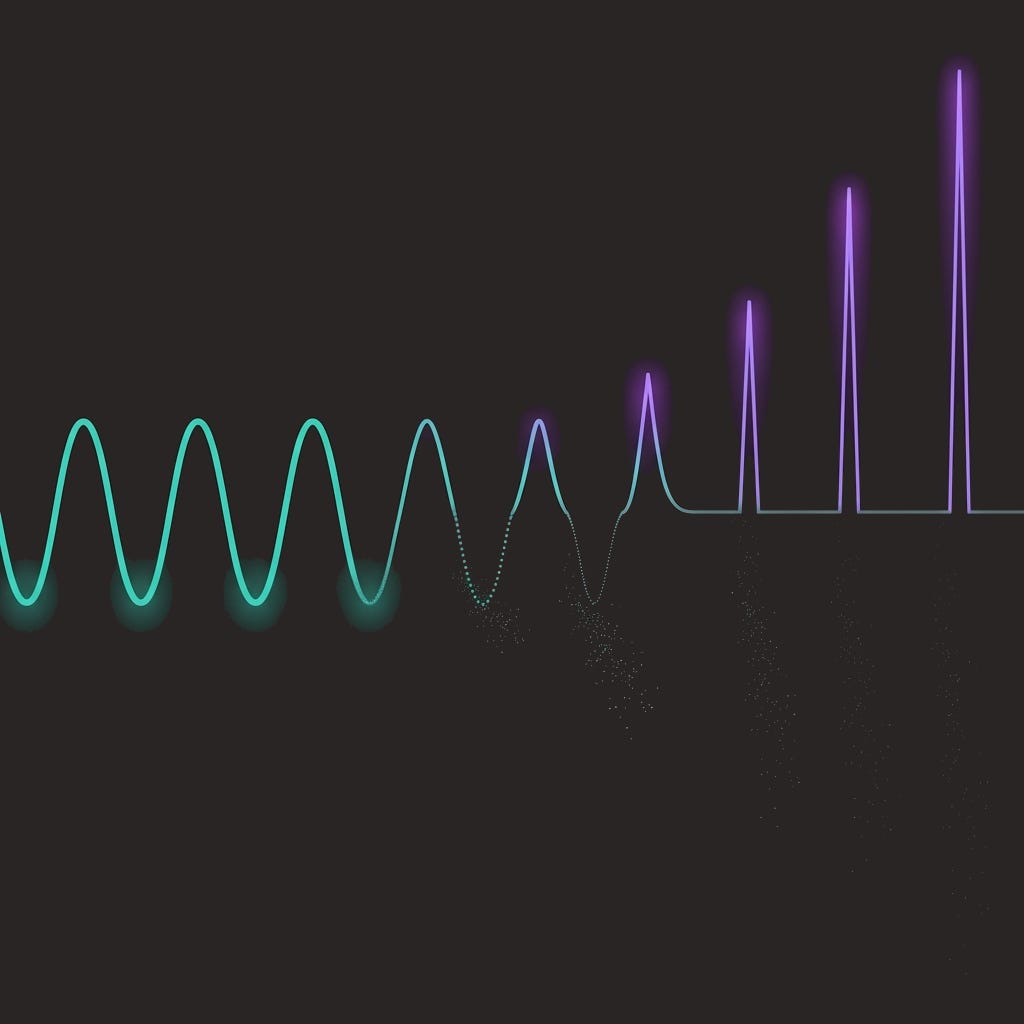
What the current generation of AI absorbs is, almost by definition, the routine: the standard ticket, the reconciliation, the first draft, the ordinary claim, the meeting notes, the status report. That is what it means for work to be automatable — it is regular enough to be learned from examples. So the machine eats from the middle of the bell curve outward, and what it leaves behind is the residue: the complex, the emotional, the ambiguous, the genuinely novel.
Klarna ran this experiment in public. In 2024 the company announced its AI assistant was doing the work of 700 customer service agents. In 2025 came the quieter second act: the company started hiring humans again. CEO Sebastian Siemiatkowski’s post-mortem, delivered to Bloomberg, was admirably blunt — “We focused too much on cost. The result was lower quality.” The arrangement Klarna landed on is the template now being stamped across the economy: the AI keeps the routine volume; a smaller pool of humans handles the complex, the emotional and the judgment-heavy. Klarna’s reversal was reported as a retreat from automation. It was nothing of the sort. It was the Exception Economy finding its stable form.
The economics are seductive, and they are real. The landmark study of generative AI in the workplace — Brynjolfsson, Li and Raymond’s “Generative AI at Work”, published in The Quarterly Journal of Economics in 2025 — followed 5,179 customer support agents and found the tool raised productivity 14% on average, and a remarkable 34% for novice workers, because it hands the newest people the accumulated playbook of the most experienced. Routine work, it turns out, is exactly the work AI does best on a human’s behalf. Which is why it is disappearing first.
There is a second stream feeding the residue, and it is easy to miss: the machine’s own output. Automated work does not arrive finished; it arrives plausible. Somebody has to read it, judge it, and catch the small fraction that is confidently wrong — and that somebody is doing exception work too, because every review is a judgment call with no routine attached to it. The Upwork Research Institute found 39% of AI-using employees now spend more time reviewing AI-generated content than they expected the tools to save, and nearly half cannot see how the promised productivity gains are supposed to materialise. The routine did not simply leave the workday. It came back as verification — the one form of routine that offers neither rest nor reps.
But watch where everything flows. Two conveyor belts now run through every AI-adopting organisation. The routine flows to the machine. The exceptions flow to the most capable human available. Reporting through 2026 keeps surfacing this second routing rule: when agents handle the clean, documented process, the exceptions they generate get escalated to the strongest people on the floor — usually senior staff who once managed the whole process and now manage only its failures. Their role quietly shifts from execution to escalation. Harvard Business Review put the resulting pattern on its front page in February 2026 with a headline that could serve as this edition’s subtitle: AI doesn’t reduce work — it intensifies it.
And the remaining human work runs at machine tempo. Microsoft’s 2025 Work Trend Index, drawing on 31,000 workers across 31 markets, measured the texture of the modern workday: an interruption every two minutes during core hours — 275 a day — 153 Teams messages and 117 emails daily, meetings after 8pm up 16% year on year. Nearly half of employees, 48%, describe their work as chaotic and fragmented. That is what a workday feels like when the valleys have been removed from it.
The Drudgery Dividend: what the boring work was paying for
Here is the accounting error at the centre of almost every AI business case: routine work was booked as pure cost. Minutes to be recovered, salaries to be redeployed, toil to be eliminated. What never appeared on any ledger is that the routine was simultaneously paying four subsidies to the organisation that hosted it — call it the Drudgery Dividend. Cancel the routine and you cancel the dividend, whether you noticed you were receiving it or not.
Recovery. Sustainable jobs have rhythm: hard calls and easy stretches, peaks and valleys. The valleys were not wasted time — they were where the peaks got metabolised. Emergency medicine, the one profession that has always done all-exception work, learned this the hard way and engineered around it: shift limits, rotations, decompression, staffing ratios. Knowledge work is now importing the emergency department’s intensity with none of its safeguards. The strain is already measurable: the Upwork Research Institute found that while 96% of C-suite leaders expect AI to lift productivity, 77% of employees using AI say it has increased their workload — and 71% report burnout. By 2026, studies were finding frequent AI users reporting markedly higher burnout than non-users — the opposite of the promise, and exactly what you would predict if the tools were stripping the recovery out of the workday.
Rehearsal. Skills are not stored; they are maintained. The easy reps were the maintenance schedule — the ordinary cases through which a professional’s pattern library stayed current without anyone calling it training. Bainbridge’s second irony, operating at economy scale: the same automation that handles the routine removes the practice that kept humans capable of the exceptions. The QJE study’s most striking number has a shadow side here. If a novice with AI performs near an experienced worker’s level on routine work, organisations will conclude the routine no longer needs to be humanly practised at all. Those were the reps the next generation of instinct was going to be built from.
Radar. Anomaly detection is a by-product of exposure to the normal. Priya could spot the fraudulent claim because she had processed ten thousand honest ones; auditors, security analysts, editors and underwriters all train their sense of wrongness on volume — ordinary volume. Security operations teams discovered this early: hand the tier-one alert queue to a model, and within a year the senior analysts reviewing its escalations have lost the ambient feel for the network’s ordinary weather — the baseline hum against which an intrusion used to stand out. Route the ordinary through the machine, and the human reviewing its escalations is comparing them against a fading memory of what normal looked like. The twist is genuinely cruel: the better the automation gets, the less often its humans see the ordinary, and the weaker their radar becomes — precisely as the cases reaching them get stranger.
Ramps. The easy work was the on-ramp. I wrote in May about the apprenticeship pipeline collapsing as AI absorbs entry-level tasks; the Exception Economy generalises the problem. Ramps were never only for juniors — they were how career switchers crossed domains, how returners rebuilt confidence, how the newly promoted learned an adjacent craft sideways. A workplace made entirely of hard cases has no shallow end for anyone. Every entrance is a cliff edge.
The four job shapes of the Exception Economy
Subtract the routine and the remaining human roles start collapsing into four recognisable shapes. Most organisations contain all four already, unnamed.
The Escalation Magnet. The most capable person on the team, to whom everything the machine cannot handle now flows. Their reward for excellence is more exceptions; their calendar is other people’s edge cases; their job title still describes a role that no longer exists. They are the first to burn out — and when they leave, their queue reroutes to the next most capable person, who inherits both the workload and the trajectory.
The Standing Reserve. Retained “for oversight”. They review machine output, approve, and wait. Their risk is not overload but hollowing: they are Bainbridge’s control-room operator, monitoring a system that almost never needs them, their skills decaying in place — until the day the system fails in a way that requires everything they used to be able to do.
The Emergency Generalist. Common in smaller firms: the human who spans whatever the agents cannot do that day. Half-finished automations, weird vendor cases, the customer who insists on a person. They context-switch across domains at machine tempo and master none of them. Microsoft’s every-two-minutes interruption figure is not a statistic to them; it is a biography.
The Valley Keeper. The rarest shape, and the only deliberately designed one: someone whose role intentionally retains a flow of ordinary work — the audit sample, the manual Friday pass, the rotation through routine cases the machine could have handled cheaper. On a cost spreadsheet they look like waste. They are the last people in the building whose sense of normal is current, whose reps are fresh, and next to whom a junior can still learn. Organisations that keep Valley Keepers are not being sentimental. They are maintaining the baseline everyone else’s judgment silently depends on.
What to do about it
For individuals, the shift is to treat recovery and routine as skill maintenance rather than slack. Schedule valleys as deliberately as you schedule meetings. Keep a personal flow of ordinary reps in your core craft — write the ordinary brief yourself sometimes, work a handful of unremarkable cases end-to-end each week — not from nostalgia, but because your radar and your instincts are calibrated on exposure you are no longer getting by default. And track your own exception load: count what share of your week is escalations. When it approaches all of it, the problem is the role’s design, not your resilience — and the negotiation you need is about the role.
For managers, the emergency department is the manual. Rotate people on and off the escalation queue the way hospitals rotate trauma shifts, and treat sustained exception load as an occupational exposure to be measured and capped, not a badge of seniority. Then maintain the baseline deliberately: route a sample of ordinary cases through human hands even when the machine could handle them — auditors have worked this way for a century — and protect real routine work for development purposes, priced honestly as training rather than disguised as inefficiency.
For leaders, the ask is to put the Drudgery Dividend into the automation business case itself. The four subsidies do not disappear as needs when the routine disappears as work; they become unfunded liabilities. Recovery now costs headroom. Rehearsal now costs mandated reps. Radar now costs sampled volume. Ramps now cost deliberately inefficient junior work. An automation plan that books the savings without booking these replacement costs is not a productivity plan — it is a deferral schedule, and the interest compounds in the working lives of your best people until it gets paid all at once, in resignations. Klarna paid it in public. Most organisations will pay it quietly.
For hiring, stop writing roles that are 100% exception handling and calling them senior. Screen for ambiguity tolerance, yes — but a role designed without valleys will consume whoever you hire into it, and the more capable they are, the faster the Exception Economy will find them. The interview question worth adding is not about coping with pressure — it is about what the candidate does between peaks, because in the role you are designing, there is no between unless you build one.
The part nobody budgeted for
The promise was that AI would free people for “more meaningful work”, and it is keeping that promise with a precision nobody requested. Meaning, distilled, at machine tempo, with all the filler removed. It turns out the filler was doing something. A workday of pure significance is not a gift; it is a load rating exceeded — and the people carrying it are, by the routing logic of the whole system, the ones you can least afford to lose.
The uncomfortable truth of the Exception Economy is that the boring parts of the job were never the obstacle to the best work. They were the price the job was quietly paying to keep people capable of the best work — the recovery that made intensity survivable, the rehearsal that kept instincts current, the radar that noticed what the machine could not, the ramps the next generation climbed in on. AI has stopped paying that price. The need did not go away.
Someone still has to pay it. Right now, by default, it is being paid in the working lives of your most capable people — invisibly, until the Tuesday the machine meets something it has never seen and hands it, at last, to a human whose radar has faded, whose reps have lapsed, and whose last valley was eighteen months ago. That is the moment an organisation discovers what the routine was really for. The wise ones will have discovered it on purpose, earlier, and paid for it while it was still cheap.