

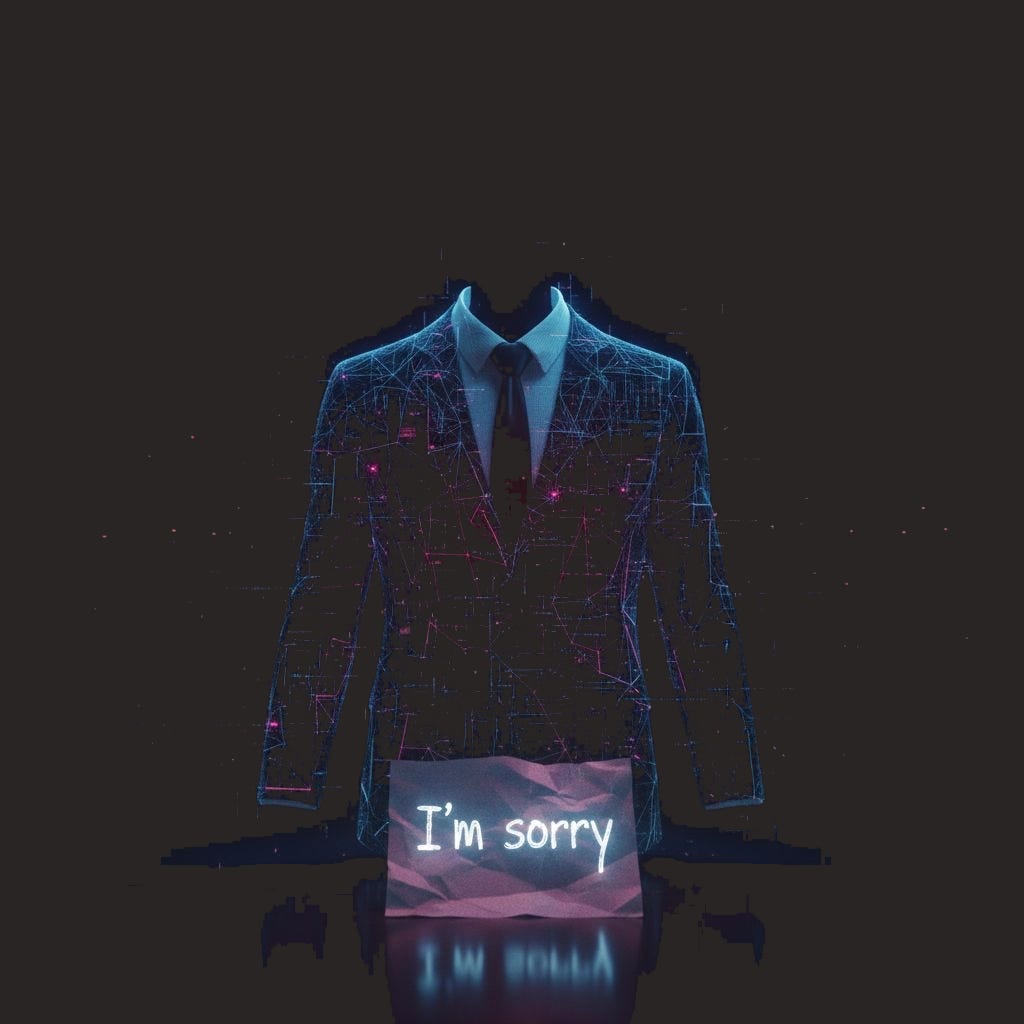
In 2026, the most dangerous thing a leader can do is be perfectly articulate.
We have entered the era of empathy-as-a-service. With a single prompt, an LLM can draft a performance review that is firm but supportive, a layoff notice that is deeply regretful, or a celebratory note that is vibrant and inclusive. On the surface, the output is flawless. The cadence is professional. Right words, right places. Right timing.
But there is a hollow ring to it. We are witnessing the birth of polite nihilism: a workplace culture where everything sounds empathetic, but nobody believes a word of it. We are optimising for the appearance of care while systematically removing the human cost of caring.
Simulated sentiment vs. biological stakes
The fundamental flaw of algorithmic empathy is the belief that empathy is a linguistic achievement. It isn’t.
Empathy is a biological tax.
In the pre-AI era, delivering hard news or providing deep support required intentional friction. Your heart rate rose. Your voice might have wavered. You had to sit in the physical discomfort of another person’s reaction. That “stink of humanity” was the proof of the message’s validity.
The machine can simulate the sentiment, but it cannot feel the stakes. When you use an LLM to soften the blow, you aren’t being efficient. You are signalling that the relationship isn’t worth the emotional labor of the struggle. A perfectly drafted AI apology is worth less than a messy, stuttered human one because the human version carries the cost of presence. In a world of infinite, free text, the only thing that retains value is the thing that was hard to produce.
The rise of the ghostwritten leader
We are seeing a new archetype in the boardroom: the ghostwritten leader. These are managers who use AI as a high-tech buffer. They use it to “find the right words” for every sensitive Slack message, every difficult feedback loop, and every “vulnerable” LinkedIn post.
The irony is that by seeking the right words, ghostwritten leaders lose the true words.
Your team doesn’t actually want a 140-billion-parameter model’s version of support; they want yours. They want your specific idioms, your slightly awkward phrasing, and your genuine perspective. When you hide behind an algorithm, you aren’t leading; you are narrating a script. Trust is not a result of “optimal communication.” Trust is a byproduct of shared risk. If there is no risk in your words, if they were generated by a risk-free probability engine, there is no basis for trust.
The mirror test: curation is not connection
The “Curation Trap” we discussed previously has now moved into our relationships. We treat our interactions like an executive glance; we look at three versions of a sympathetic response generated by the AI, pick the one that feels least offensive, and hit send.
This is the mirror test of 2026: if you cannot defend the sentiment of a message without looking at the prompt that generated it, you have abdicated your leadership.
When we curate empathy, we treat people as variables to be managed rather than souls to be led. We become shadow experts of emotion: fluent in the output of kindness, but unable to explain the internal plumbing of our own convictions. We are losing the muscle memory of direct, unmediated human connection.
Reclaiming the human premium
To maintain your sovereignty as a leader, you must intentionally reintroduce the friction of the un-prompted life. This doesn’t mean abandoning tools; it means knowing where the tool ends and the person begins.
The “raw first” rule: for any communication involving emotion, stakes, or conflict, the first draft must be written in a vacuum. No “make this sound more professional” prompts.
The medium is the message: in 2026, the handwritten note and the face-to-face (or voice-to-voice) call are the only high-trust channels left. If the text is “too perfect,” the brain ignores it as noise.
Own the awkwardness: if a conversation feels difficult, let it be difficult. The human premium belongs to the leader who is willing to be imperfect in person rather than perfect in a prompt.
The soul in the machine
The machine will always be more polite than you. It will never lose its temper, it will never miss a social cue, and it will never be tired. But it will also never care. It cannot stay up at night wondering if it treated a teammate fairly. It cannot feel the weight of a decision.
Leadership is not a content game. It is a presence game.
Stop trying to be the most articulate person in the room. Start trying to be the most present. In an age of algorithmic empathy, the most radical act of leadership is to put the tool down and speak for yourself.